Plain grey concrete
Plain concrete driveways in Sydney
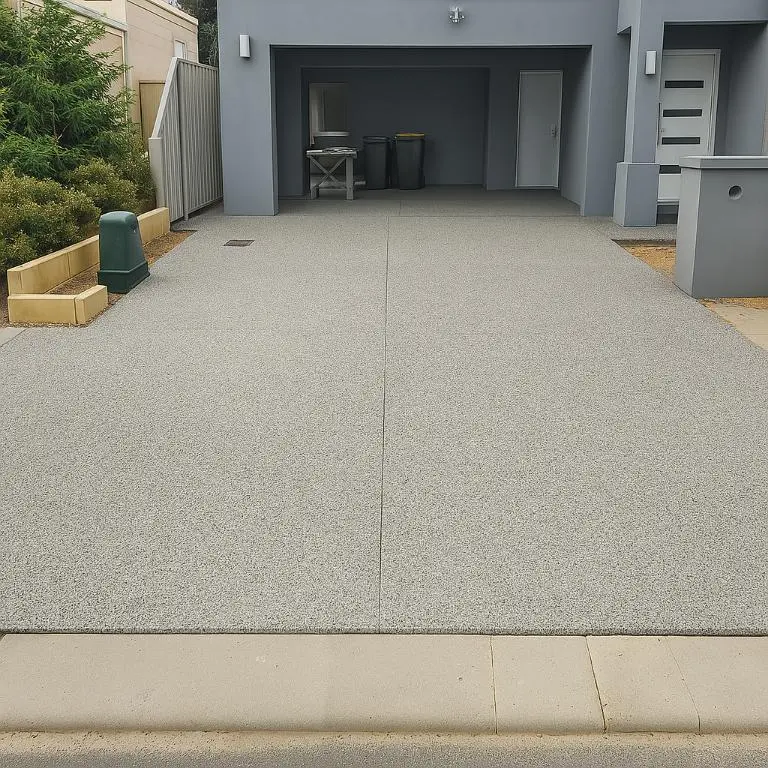
A plain concrete driveway is natural grey concrete with a broom or smooth finish. It's the simplest and best-value way to get a strong driveway, and how long it lasts comes down to what's underneath it. We lay and seal plain driveways across Sydney, and we can take out your old driveway first.
- Price
- After we measure up
- Finish
- Broom or smooth
- Sealed
- As part of the job
Is plain right for you?
When plain concrete is the smart choice
Plain concrete makes the most sense where the driveway has to work hard and look tidy without the extra cost of a decorative finish. Long driveways are the obvious case, because every square metre adds up. It's also the usual choice for rentals and investment properties, and for the side and back sections of a driveway behind a decorative front section that's seen from the street.
The trade-off is that plain grey shows tyre marks, oil and leaf stains more than exposed aggregate, which hides them in the stones. Sealing helps a lot, which is why we seal every plain driveway we lay.
A good plain driveway is about the build
With no decorative finish to look at, the quality of a plain driveway is all in the parts you can't see: the base, the thickness, the steel and the joints. A cheap plain driveway and a good one can look the same on day one and very different five years later.
Finishes
Broom finish or smooth finish?
Plain concrete comes in two main surface finishes, and the choice is mostly about grip versus looks.
Broom finish
Once the concrete has been levelled and smoothed, a broom is dragged across the surface to leave fine ridges. Those ridges give tyres and shoes grip when it's wet, which is why a broom finish is the most common choice for driveways, and the safer one on any slope.
The broom lines are run across the slope, not down it, so they work against slipping. The edges are usually trowelled smooth to give a neat border around each panel.
Smooth finish
The surface is trowelled until it's flat and smooth, giving a cleaner, more modern look that's easy to sweep. It's slicker when wet, so it suits flat driveways and covered areas such as carports better than a sloping driveway out in the rain.
Sealing adds a little more slip risk on a smooth surface, so on anything but a flat driveway we'd usually recommend broom.
Under the surface
What goes into a plain driveway that lasts
These are the details worth asking about on any quote, because they decide whether a plain driveway cracks, sinks or stays flat for decades.
Thickness
A driveway for normal cars is usually around 100 mm thick. A caravan, boat, trailer or delivery truck needs a thicker slab, so tell us what will park or turn on it and we'll build to suit.
Reinforcing mesh
Steel mesh doesn't stop concrete cracking, but it holds the slab together when it does, so a hairline crack stays a hairline. It only works if it sits inside the concrete on bar chairs, not pressed into the ground beneath it.
A compacted base
The ground is dug out, filled with road base and compacted firmly. Soft spots, loose fill and tree roots are where driveways sink and crack, so this step matters more than anything on top.
Control joints
Joints are cut or tooled at regular spacing so each panel stays roughly square. Concrete shrinks as it dries, and the joints give it a straight line to crack along instead of a random one.
Fall and levels
The driveway is set with enough fall to drain water away from the garage and house, and to meet the street and garage floor without a lip or a scrape.
The right mix and curing
Driveways need a mix suited to vehicle traffic, placed without extra water added to make it easier to spread, then kept off for long enough to cure before cars go on it.
Compare
Plain vs coloured vs exposed aggregate
All three are built the same way underneath. The difference is in the surface, and how much it hides.
| Plain | Coloured | Exposed aggregate | |
|---|---|---|---|
| Look | Natural grey, broom or smooth | One solid colour, broom or smooth | Textured, the stones are the colour |
| Hides tyre marks and oil | Shows them most | Shows them on very light or dark colours | Hides them best |
| Grip when wet | Good with a broom finish | Good with a broom finish | Very good |
| Upkeep | Reseal every few years | Reseal every few years | Reseal every few years |
| Relative cost | The lowest | More than plain | More than plain |

Cost
What a plain concrete driveway costs
Plain concrete has the lowest cost per square metre of the four driveway finishes, because there's no decorative stone, oxide or pattern to pay for. We still price every driveway after measuring up, because the rest of the job varies a lot.
Removing an old driveway, access for the concrete truck or a pump, the slope of the block, the shape of the driveway and any extra thickness for heavy vehicles all change the price. Sealing is included.
At the measure
We check the site, levels and access, talk through broom or smooth, and give you a quote.
Upkeep
Looking after a plain concrete driveway
Reseal every few years
The sealer keeps oil, tyre marks and leaf stains from soaking in. When water stops beading on the surface, it's time to reseal, sooner on driveways in full sun.
Deal with oil early
Fresh oil wipes off a sealed driveway. Old stains that have soaked into grey concrete are hard to shift, so use a drip tray under a car that leaks.
Hairline cracks
Fine cracks in or near the joints are normal as concrete shrinks. Wider cracks, or panels that have moved up or down, point to a problem with the base and are worth having looked at.
Clean gently
A broom and hose do most of the work. A pressure washer with a wide fan is fine on plain concrete, but harsh acids can etch the surface and leave it patchy.
Questions
Plain concrete driveway questions
How thick should a concrete driveway be?
A driveway for normal cars is usually around 100 mm thick. If heavier vehicles such as a caravan, boat, trailer or delivery truck will use it, it needs to be thicker. We confirm the right thickness for your driveway at the measure.
Does a plain concrete driveway need reinforcing?
Yes. Steel reinforcing mesh holds the slab together if it cracks, so cracks stay tight instead of opening up or stepping. It has to sit inside the concrete on bar chairs to work.
Should I choose a broom or smooth finish?
Broom for grip, smooth for looks. A broom finish is the safer choice for any sloping or exposed driveway, while a smooth finish suits flat driveways and covered areas such as carports.
Should a plain concrete driveway be sealed?
Yes, we recommend it, and we seal every plain driveway we lay. Sealing helps the surface resist oil, tyre marks and stains, and makes it easier to clean. It should be resealed every few years.
Is concrete or asphalt better for a driveway?
Concrete lasts longer, stays cooler and holds its shape better under parked cars, particularly in hot weather when asphalt can soften. Asphalt is usually cheaper to lay. For most Sydney homes, concrete is the longer-term choice.
Will a plain concrete driveway crack?
Some fine cracking is normal as concrete shrinks, which is why we cut control joints for it to follow. A compacted base, the right thickness and steel reinforcing keep cracks tight and stop panels moving.
How long before I can drive on a new concrete driveway?
You can usually walk on it after a day or two and drive on it after about a week, depending on the weather and the mix. We'll give you the dates for your job.

Free quote
Get a quote for a plain concrete driveway
New driveway or replacing an old one, we'll come out, measure up and give you a quote for the finish you want.
- Phone02 7501 0418
- Emailinfo@sydneyconcretedrivewaysco.com.au
- AreaAll of Sydney
Get my free quote
All fields are needed so we can come prepared.